
IOT in Automotive Industry: Application, Benefits, and Future Trends
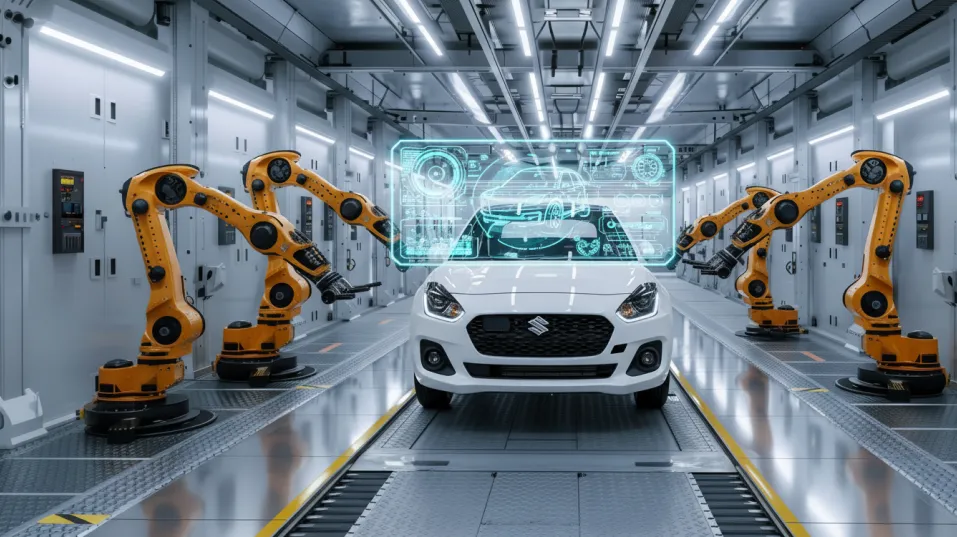
IoT in the automotive industry is transforming vehicles into intelligent, connected, & software-defined systems. It is shaping the future of mobility through predictive maintenance. IoT technologies also improve safety through Advanced Driver Assistance Systems (ADAS). They support real-time fleet management & better vehicle monitoring.
With over 400 million connected cars projected by 2026, IoT, coupled with 5G, enables V2X communication & over-the-air (OTA) updates. It will create a safer, efficient, & personalised driving experience.
A Glimpse into the IoT Automotive Market
- The Automotive Internet of Things market is growing steadily & is expected to reach USD 1,094.12 billion by 2034.
- McKinsey estimates that by 2030, over 90% of vehicles sold will be connected vehicles.
- IoT Automotive is fueling predictive maintenance, telematics, CV2X, & other technologies central to modern vehicles.
Architecture of IoT in the Automotive Industry
To understand how these capabilities work in real vehicles, it is important to look at the underlying architecture of IoT automotive systems.
Automotive IoT is typically structured in four layers, each with a specific role.
1. Perception Layer (Sensing Layer)
This layer includes all the sensors and devices installed in the vehicle. They collect real-time data such as:
- Speed and fuel levels
- Engine temperature
- Tire pressure
- Driver behavior
- Vehicle location
In automotive IoT, this layer continuously monitors operating conditions.
2. Network Layer (Communication Layer)
The network layer transfers data from the connected vehicle in IoT to cloud platforms or other systems. It uses technologies such as:
- Cellular networks (4G, 5G)
- Wi-Fi
- Bluetooth
- GPS
This layer ensures seamless & secure communication.
3. Data Processing Layer
This is where raw data is processed and analysed in the IoT automotive.
- Data is stored in cloud systems
- Analytics and AI tools identify patterns
- Insights are generated for decision-making
In the IoT automotive industry, this layer supports predictive maintenance, driving behaviour analysis, & system performance monitoring.
4. Application Layer
The application layer of the IoT automotive delivers information to users. Examples of automotive Internet of Things include:
- Driver dashboards
- Mobile apps
- Fleet management platforms
- Maintenance alerts
This is the layer that drivers and businesses interact with the most.
Key Applications & Benefits of IoT in the Automotive Industry
At an industry level, IoT in the automotive industry enables a range of applications that improve safety, efficiency, & operational control.
Predictive Maintenance
IoT in cars & other vehicles enables detection of issues before they become serious problems.
- Reduces breakdowns
- Lowers maintenance costs
- Extends vehicle life
Connected Vehicles
Vehicles such as connected cars in IoT can communicate with:
- Other vehicles
- Traffic systems
- Emergency services
This improves safety & traffic management.
In-Vehicle Infotainment
Connected vehicles in IoT enhance the driving experience by offering:
- Navigation & real-time traffic updates
- Music & streaming services
- Voice assistants
Smart Infrastructure Integration
Vehicle IoT can interact with smart roads, traffic signals, & parking systems. This will lead to:
- Reduced congestion
- Better route planning
- Improved urban mobility
Fleet Management
For businesses, vehicle IoT enables:
- Real-time vehicle tracking
- Fuel usage monitoring
- Driver behaviour analysis
- Route optimisation
Autonomous Driving & ADAS
Automotive Internet of Things plays an important role in advanced driving systems. These systems help with:
- Collision prevention
- Lane control assistance
- Support for self-driving functions
Over-the-Air (OTA) Updates
Vehicle software can be updated remotely using IoT. This allows:
- Performance improvements
- Faster security updates
- Reduced service centre visits
In-Vehicle Infotainment
Connected vehicle systems improve comfort and convenience. They offer:
- Internet-enabled services
- Personalised content
- A better in-car experience
Usage-Based Insurance
Driving data collected through IoT helps insurers assess risk. This leads to:
- Fair pricing based on driving habits
- Greater transparency for customers
Smart Manufacturing
IoT improves efficiency during vehicle production. It helps manufacturers with:
- Quality monitoring
- Reduced errors
- Smoother production processes
Vehicle-to-Everything (V2X) Communication
Vehicles can exchange information with their surroundings. This includes:
- Other vehicles
- Road infrastructure
- Pedestrians
Automotive applications in IoT improve efficiency & reduce operational costs.
Understanding IoT in Connected Cars: An Automotive Industry Example
To understand how IoT works in the automotive industry in practice, connected cars provide a clear & widely used example. A connected car is a vehicle with internet access and onboard technology that allows it to communicate with other systems, devices, & cloud platforms. They have features like:-
- Real-time navigation
- Remote diagnostics
- Entertainment
- Safety alerts
- Over-the-air software updates.
They essentially make IoT automotive a smart, interactive part. This connectivity enables two-way data flow for enhanced convenience & efficiency. This forms a more responsive driving experience, from smartphone integration (like Android Auto/Apple CarPlay) to vehicle-to-vehicle (V2V) communication.
IoT-Enabled Features in Connected Cars: Enhancing Safety & Convenience
Safety Features in Connected Cars
Predictive Maintenance
IoT in connected cars uses sensors to monitor vehicle condition. These systems alert drivers early & help prevent breakdowns.
Driver Assistance Systems
IoT in cars supports features such as collision warnings, automatic braking, & lane alerts. These features improve road safety.
Vehicle Communication
Connected vehicles can share information with other vehicles & traffic systems. This helps drivers avoid accidents.
Driver Monitoring
Connected vehicles in IoT systems can detect driver tiredness or distraction. Alerts help drivers stay focused.
Vehicle Security
IoT in cars allows real-time tracking & remote locking. Drivers receive instant alerts for any unusual activity.
Convenience Features in Connected Vehicles
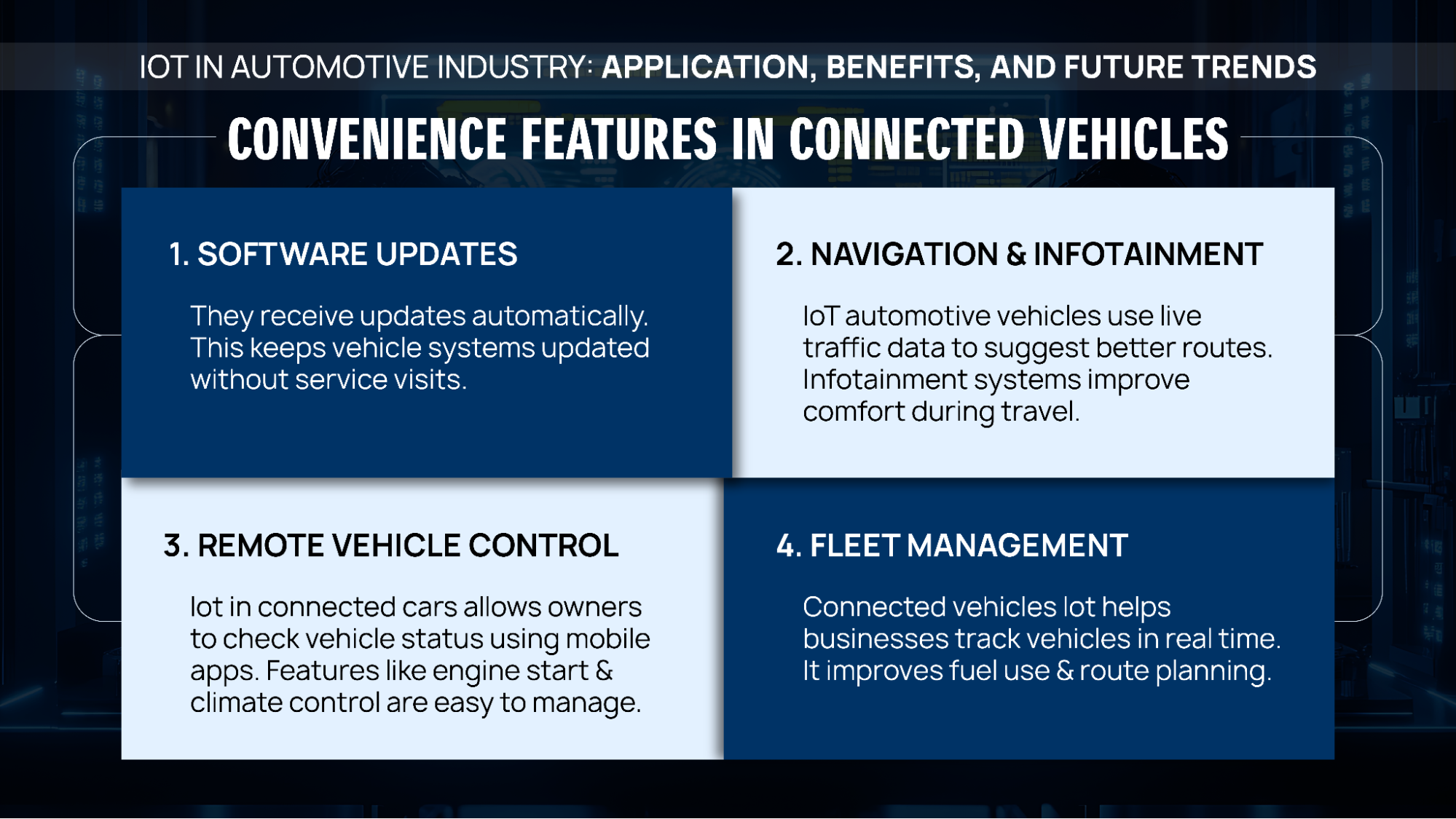
Software Updates
They receive updates automatically. This keeps vehicle systems updated without service visits.
Navigation & Infotainment
IoT automotive vehicles use live traffic data to suggest better routes. Infotainment systems improve comfort during travel.
Remote Vehicle Control
IoT in connected cars allows owners to check vehicle status using mobile apps. Features like engine start & climate control are easy to manage.
Fleet Management
Connected vehicles IoT helps businesses track vehicles in real time. It improves fuel use & route planning.
Challenges of IoT in the Automotive Industry
While the IoT & automotive industries are revolutionising, it also comes with challenges.
Network Reliability
Connected vehicles in IoT must stay connected even in remote areas. Poor connectivity can affect performance.
Data Management and Integration
Handling large volumes of data from multiple sources can be complex in the IoT automotive industry.
Security & Privacy Concerns
Connected vehicles in IoT must be protected against:
- Cyberattacks
- Data breaches
- Unauthorised access
Strong security measures are essential.
Cost of Implementation
IoT hardware, software, & infrastructure require significant investment.
Future Trends in Automotive IoT
As India promotes Smart Cities and connected infrastructure, Automotive IoT will play an important role in the future.
- 5G Integration: 5G will help vehicles connect faster & share data in real time. This will improve connected car safety and performance.
- Digital Twins: Virtual models of vehicles will be used for design, testing, & maintenance. This helps companies detect issues early.
- Sustainability: Smart driving systems will help reduce fuel use, emissions, and energy consumption.
- Cybersecurity: There will be more focus on protecting connected vehicle data from cyber threats.
- Government Push: MeitY & other government bodies are encouraging IoT adoption across different sectors, including automotive.