

ADAS Level 2 Explained: How It Works, Features & Benefits
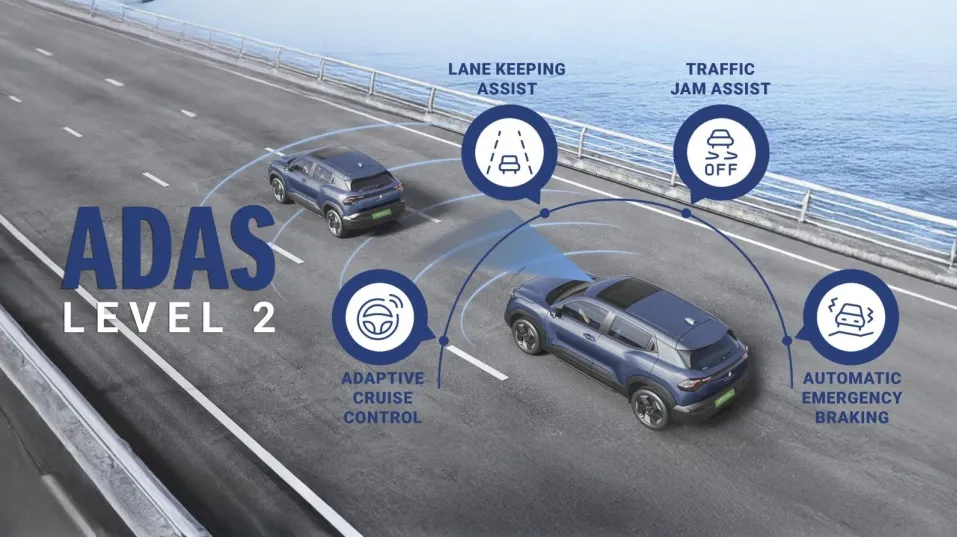
ADAS Level 2 provides partial driving automation, allowing a vehicle to control steering, acceleration, and braking simultaneously under specific conditions such as well-marked highways, steady traffic flow, and clear weather. It combines Level 2 ADAS features such as Adaptive Cruise Control and Lane Centring to assist the driver, who must remain attentive, with hands on the wheel.
Key Features of ADAS Level 2
- Adaptive Cruise Control: Maintains a set speed & distance from other vehicles. It automatically accelerates and decelerates the vehicles.
- Lane Keeping Assist: This ADAS feature keeps vehicle within its lane, reducing the risk of accidental lane departures.
- Traffic Jam Assist: Makes driving less stressful by automatically managing speed, distance, & steering in traffic jams
- Automatic Emergency Braking: Automatically applies the brakes to avoid or mitigate a collision when the system detects a potential crash.
- Lane Departure Warning System: The LDWS system is an advanced driver assistance system (ADAS) that uses cameras to monitor lane markings and alerts the driver if the vehicle begins to drift out of its lane without signaling. It enhances safety by providing visual, audible, or haptic (vibration) warnings to prevent unintentional drifting.
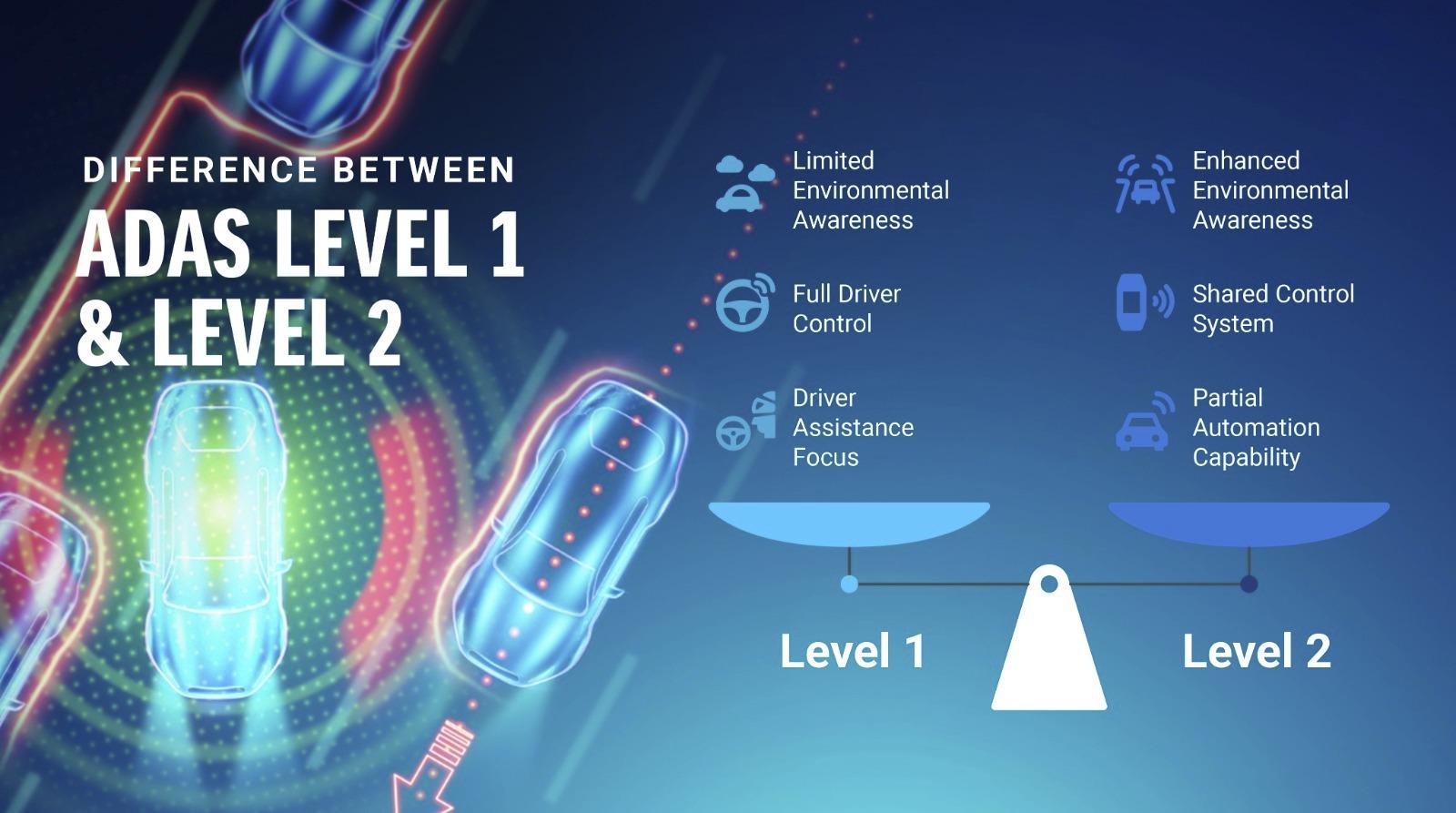
Differences Between ADAS Level 1 and Level 2
Differences between ADAS Level 1 and Level 2 based on the SAE (Society of Automotive Engineers) classification:
How does ADAS Level 2 Work?
To drive itself, a car uses cameras & radars to constantly scan its surroundings. This data is sent to a computer that controls the car's steering and speed.
Lane Keeping Assist (LKA)
How it works: Cameras read lane markings on the road.
Action: If the car strays out of the lane without signalling, the system will nudge it back to the centre.
Adaptive Cruise Control (ACC)
How it works: Radar and cameras track the distance to the car in front.
Action: Retains a set speed but slows down or accelerates automatically to maintain a safe following distance.
Lane Centering Assist
How it works: Utilises cameras to continuously follow lane markings.
Action: Makes subtle steering inputs to maintain the vehicle in the middle of its lane.
Automatic Emergency Braking (AEB)
How it works: Sensors identify obstacles or slower-moving vehicles in front.
Action: In the event of an impending collision and the driver fails to respond, the system operates the brakes.
Traffic Jam Assist
How it works: Combines lane keeping and adaptive cruise control at low speeds.
Action: Assists the vehicle to steer, brake, and accelerate in stop-and-go traffic, easing driver stress.
Driver Monitoring System
How it works: Cameras or sensors monitor the driver's eye movement or hand position.
Action: If the system identifies inattention or hands off the wheel, it provides alerts or can suspend assistance.
Benefits of ADAS Level 2
- Less Stressful Driving: Driving in our traffic can be really stressful. This system takes some of that stress away. It makes driving more comfortable.
- Safer Roads: It helps you stay in your lane depart assist & keep a safe distance. Also, it reduces the risk of accidents. More Comfortable Journeys: Long drives become less tiring & daily commutes are less of a headache.
- Saves Fuel: Smooth acceleration & braking- controlled by the system, can sometimes save you some fuel.
- Better Resale Value: Safety in cars with these features are becoming more popular. So, they might hold their value better
Challenges & Limitations of ADAS Level 2
- Road Markings: The lane-keeping feature needs clear road markings to work. If the lines are faded, it won't work well.
- Weather: Heavy rain, fog, or dust can affect the sensors. These factors make them less reliable.
- Don't Get Lazy: You still need to pay attention & drive. You cannot completely rely on the system too much.
- Expensive: Cars with ADAS Level 2 are usually more expensive.
- Road challenges: Our roads have lots of surprises, like animals & potholes, which can confuse the system.
Future Trends and Innovations in ADAS Level 2 for Safer Driving
ADAS Level 2 has just evolved. Cars will get even smarter in the future & eventually, they might be able to drive themselves in certain situations. But for now, Level 2 is a big step towards safer and more comfortable driving.
Suzuki R&D Centre India is playing an important role in shaping ADAS innovations specifically for Indian driving environments. Instead of directly jumping to full autonomy, SRDI is focusing on practical Level 2 advancements. Our work emphasises:
- Adaptive driver-assist systems for Indian roads
- Gradual transition toward connected & semi-autonomous mobility
- Improved lane detection in imperfect road markings
- Smarter braking & collision avoidance systems